
Photo By
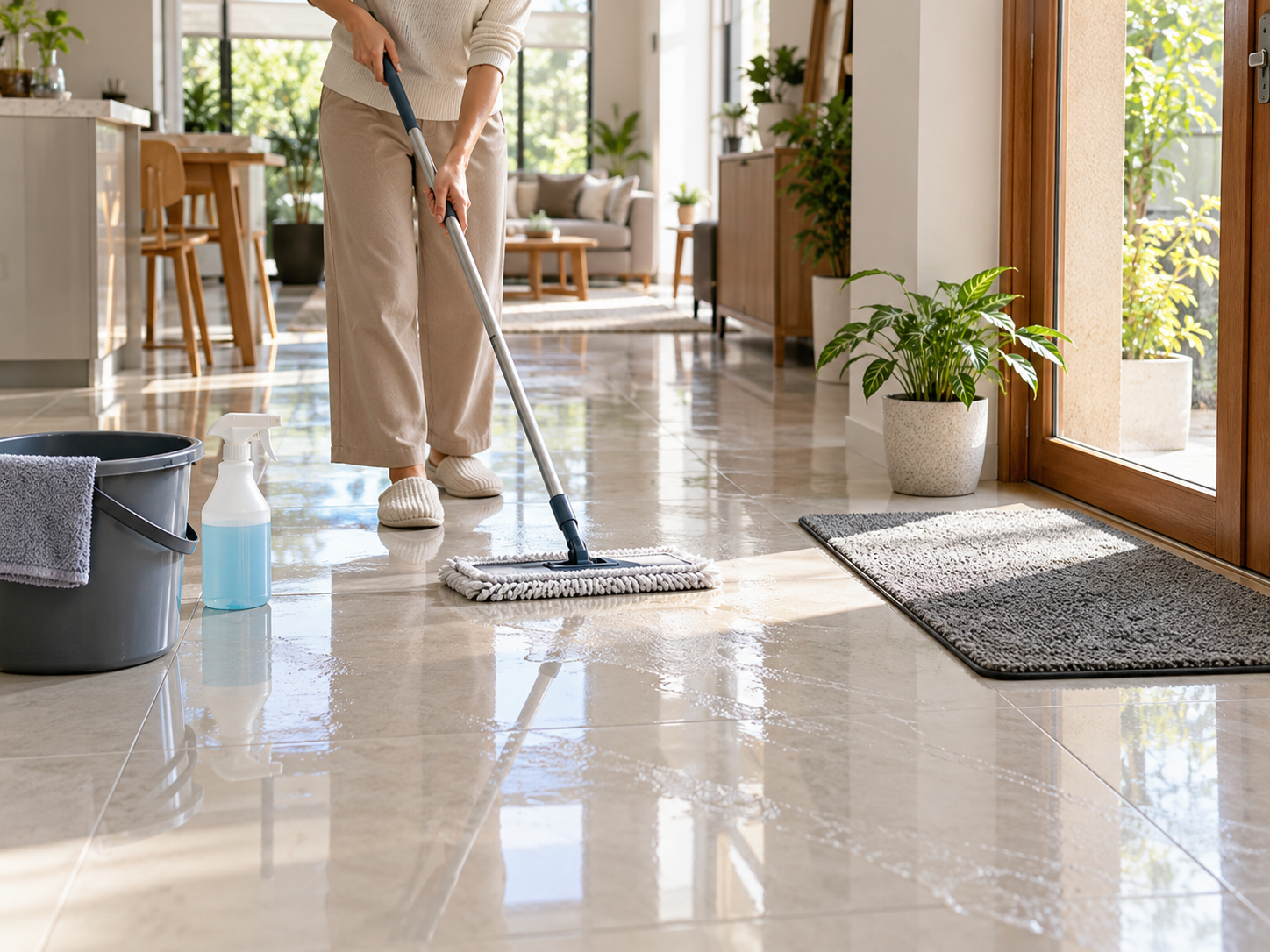
A slippery floor can not only reduce comfort but also increase the risk of slipping, especially in areas frequently used by household members. This condition is not always caused by the type of flooring material. In many cases, floors become slippery because of improper maintenance, cleaning product residue, or standing water.
By understanding the causes, you can determine the right solution while also choosing a granite surface that suits the function of each room.
Why Can Floors at Home Feel Slippery?
Here are several common causes that can make floor surfaces feel slippery.
1. The Floor Surface Is Still Wet
Water left behind after mopping, spilled drinks, or splashes from the bathroom can make floors slippery. Areas such as kitchens, bathrooms, and terraces are among the places where this condition most commonly occurs.
2. Soap or Cleaning Product Residue
Using too much cleaning solution can leave a layer of residue on the floor surface. This layer may not always be visible, but it can make the floor feel more slippery when stepped on.
3. Build-Up of Oil, Dust, and Dirt
Accumulated dirt, especially oil in the kitchen or dust mixed with water, can also cause the floor surface to become slippery. Cleaning the floor regularly can help reduce this risk.
4. Improper Use of Floor Coating Products
Some floor coating or polishing products can leave an additional layer that makes the surface more slippery. Before using a particular product, make sure it is suitable for the type of flooring you have.
5. The Floor Surface Type Is Not Suitable for the Area
Each granite finish has different characteristics. For example, areas that are frequently exposed to water, such as bathrooms or terraces, require special consideration when choosing the surface type so that it matches the function of the space.
How to Deal with Slippery Floors
If the floor starts to feel slippery, you can take the following steps.
1. Remove Cleaning Product Residue with Clean Water
If cleaning product residue is suspected, mop the floor again using clean water to help remove any remaining residue.
2. Dry Standing Water Immediately
Do not leave water puddles on the floor for too long. Use a dry mop, cloth, or other cleaning tool to dry the surface as soon as possible.
3. Use Appropriate Cleaning Tools
Use a clean mop or cloth so the cleaning process is more effective. Dirty cleaning tools can instead spread oil and dirt across the floor surface.
4. Reevaluate the Cleaning Product You Use
Choose a cleaning solution that is suitable for granite flooring and use it according to the instructions on the packaging. Avoid mixing several cleaning products at once, as this may leave residue behind.
5. Add Mats in Areas That Frequently Get Wet
Place mats near entrances, kitchens, or bathrooms to help absorb water and reduce the possibility of the floor becoming slippery.
How to Clean Floors Without Leaving a Slippery Film
Proper maintenance can help maintain the appearance of the floor while also reducing the risk of a slippery surface.
1. Use Cleaning Products According to the Instructions
Follow the dosage recommended by the manufacturer. Using excessive cleaning solution does not necessarily make the floor cleaner and may instead leave residue behind.
2. Avoid Using Too Much Liquid
Use water and cleaning solution in moderation when mopping. Excess liquid will take longer to dry and may leave a film on the floor surface.
3. Rinse and Dry the Surface Thoroughly
After cleaning, make sure the floor is free from any remaining cleaning solution and completely dry before it is used again, especially in high-traffic areas.
Clean Floors Regularly Based on Room Activity
Cleaning frequency should be adjusted according to how each room is used.
- Living rooms and family rooms can be cleaned daily to remove dust.
- Kitchens require extra attention because they are prone to oil and food residue.
- Bathrooms should be cleaned regularly to prevent soap residue and moss build-up.
- Commercial areas such as boutiques, cafés, or office lobbies should have a regular cleaning schedule based on visitor traffic.
Consistent maintenance helps maintain cleanliness while preserving the appearance of the flooring over time.
Find the Right MAGIA Granite Surface for Your Space
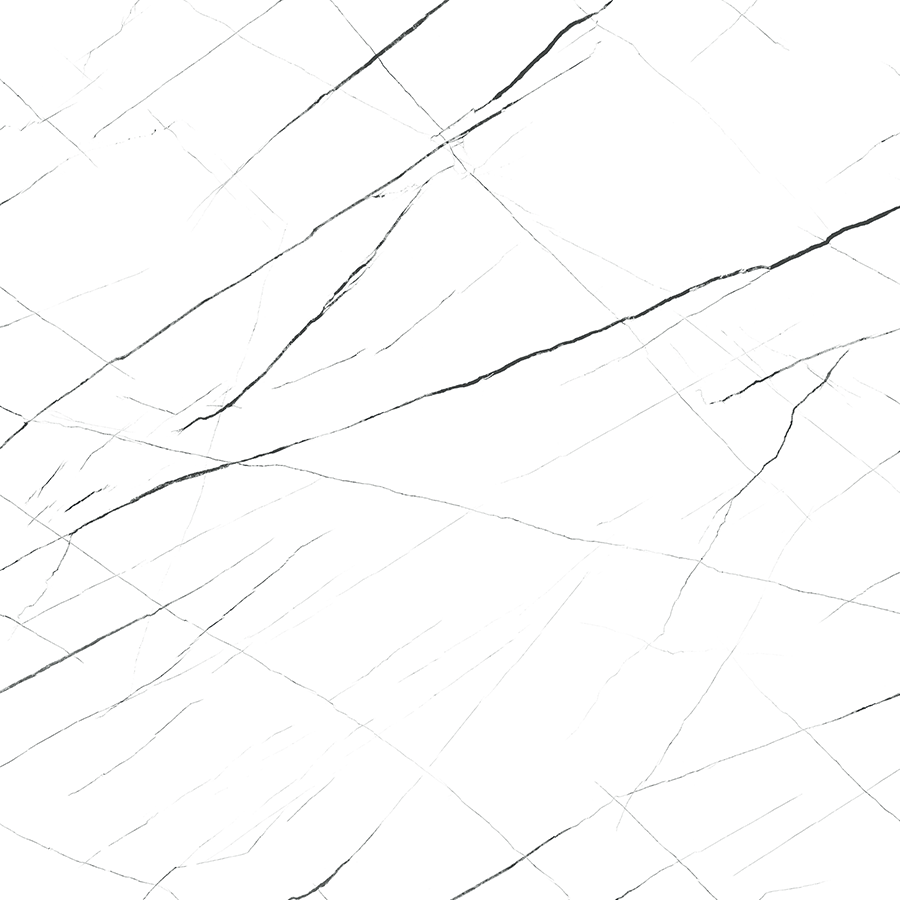
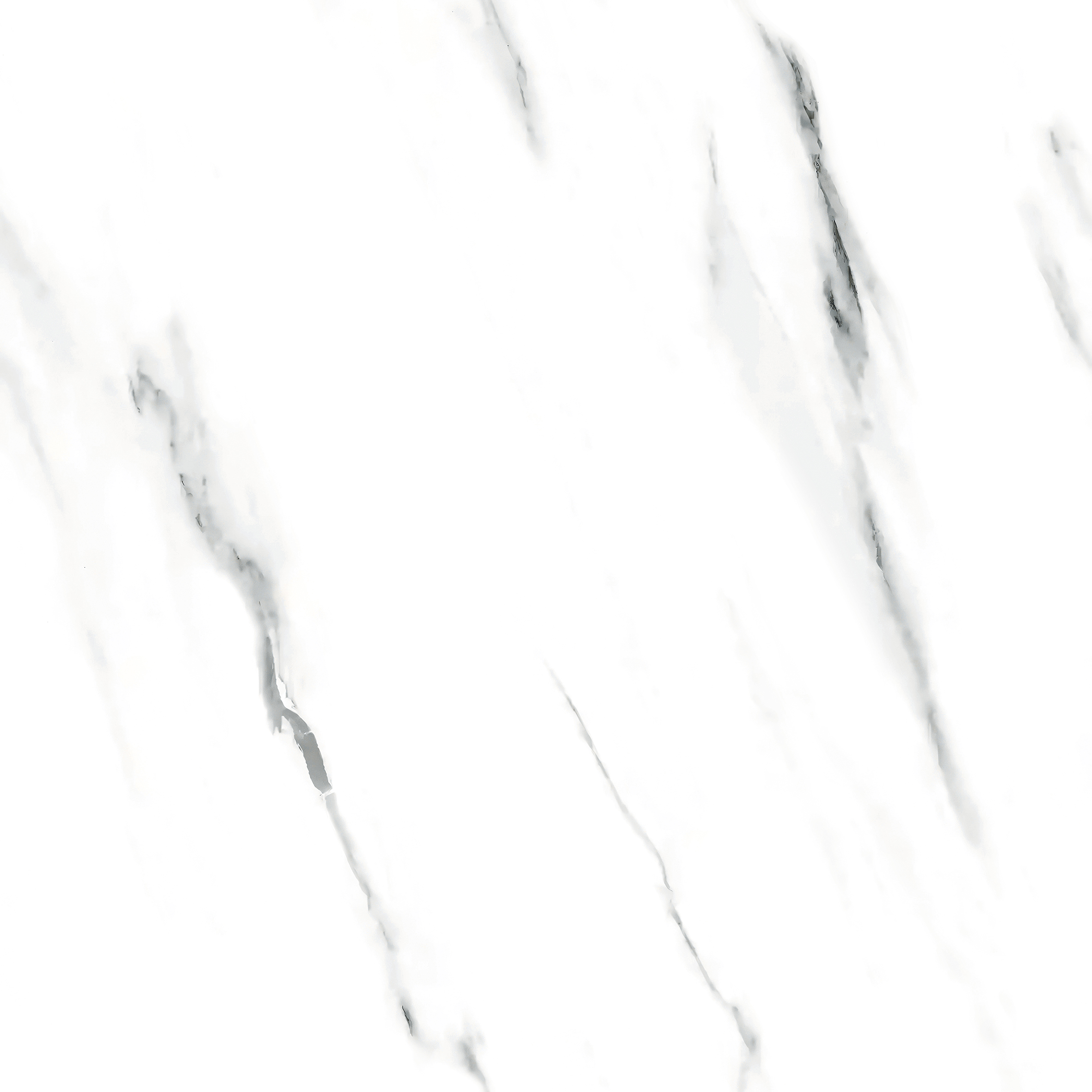
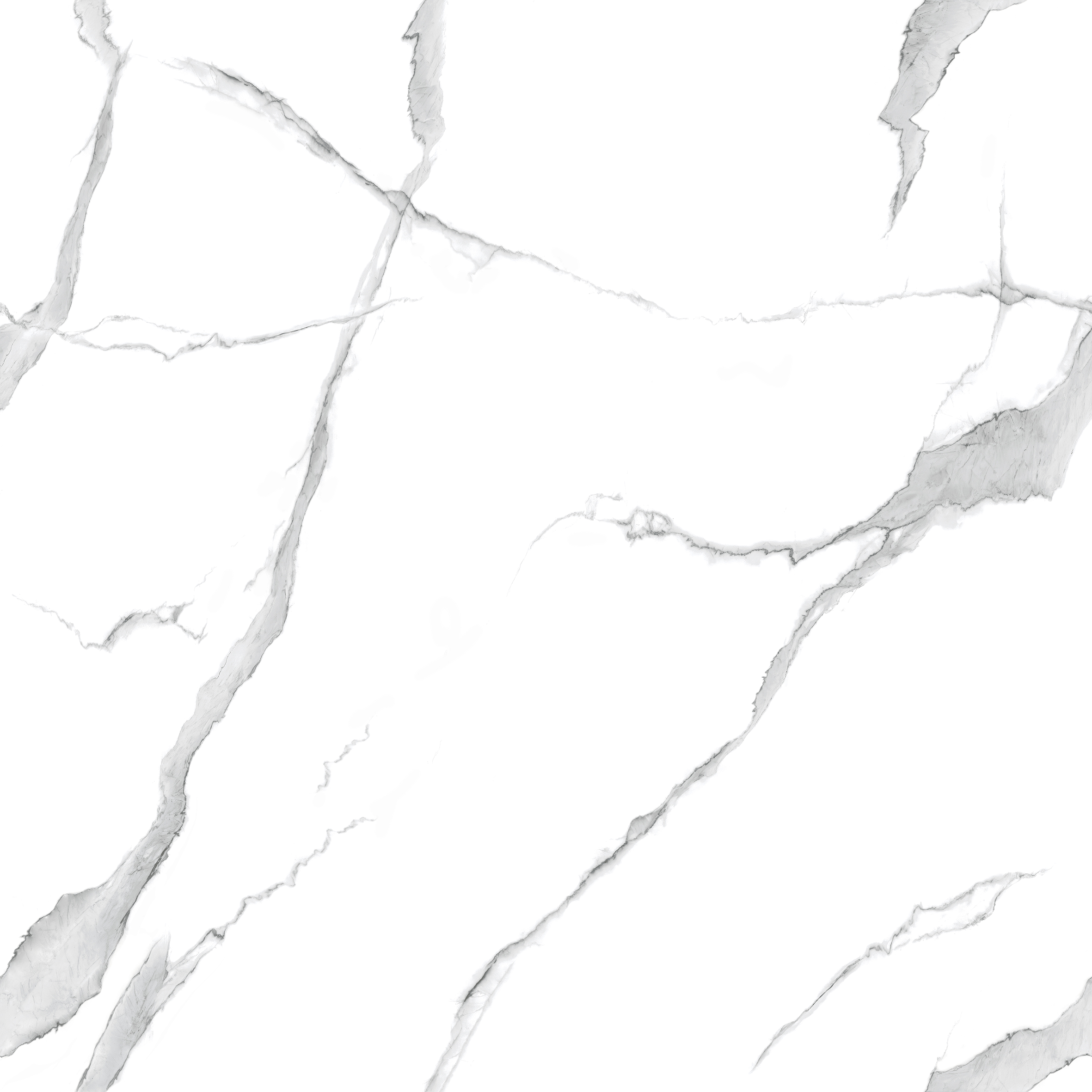
In addition to proper maintenance, choosing a granite surface with characteristics that suit the function of the room is also important for creating a comfortable space. MAGIA offers a variety of finishes such as Glossy Polished, Satin, Matt Natural, and Matt Rustic, allowing you to match the surface with your design concept and the needs of each area.
To view the collections in person, you can visit a MAGIA showroom through the Store Locator feature on the official website. Select your city or area, find the nearest showroom, and contact the store first to confirm product availability before visiting.
This way, you can compare the colors, patterns, and surface characteristics of the granite directly before making your choice.
FAQ
What causes floors to feel slippery?
Floors may feel slippery because the surface is still wet, cleaning product residue remains, oil or dirt has accumulated, unsuitable floor coating products have been used, or maintenance has not been carried out properly.
How can I deal with a slippery floor?
Remove any cleaning product residue with clean water, dry standing water immediately, use clean cleaning tools, and choose cleaning products according to their usage instructions.
Can using too much cleaning product make the floor slippery?
Yes. Excessive use of cleaning products can leave residue on the floor surface, making it feel more slippery after it dries.
How do I choose the right granite surface?
Choose a granite surface based on the function of the room and your design concept. You can view various MAGIA finishing options directly at the nearest showroom through the Store Locator feature on the official MAGIA website.
Popular Collections



Related Articles
Tips
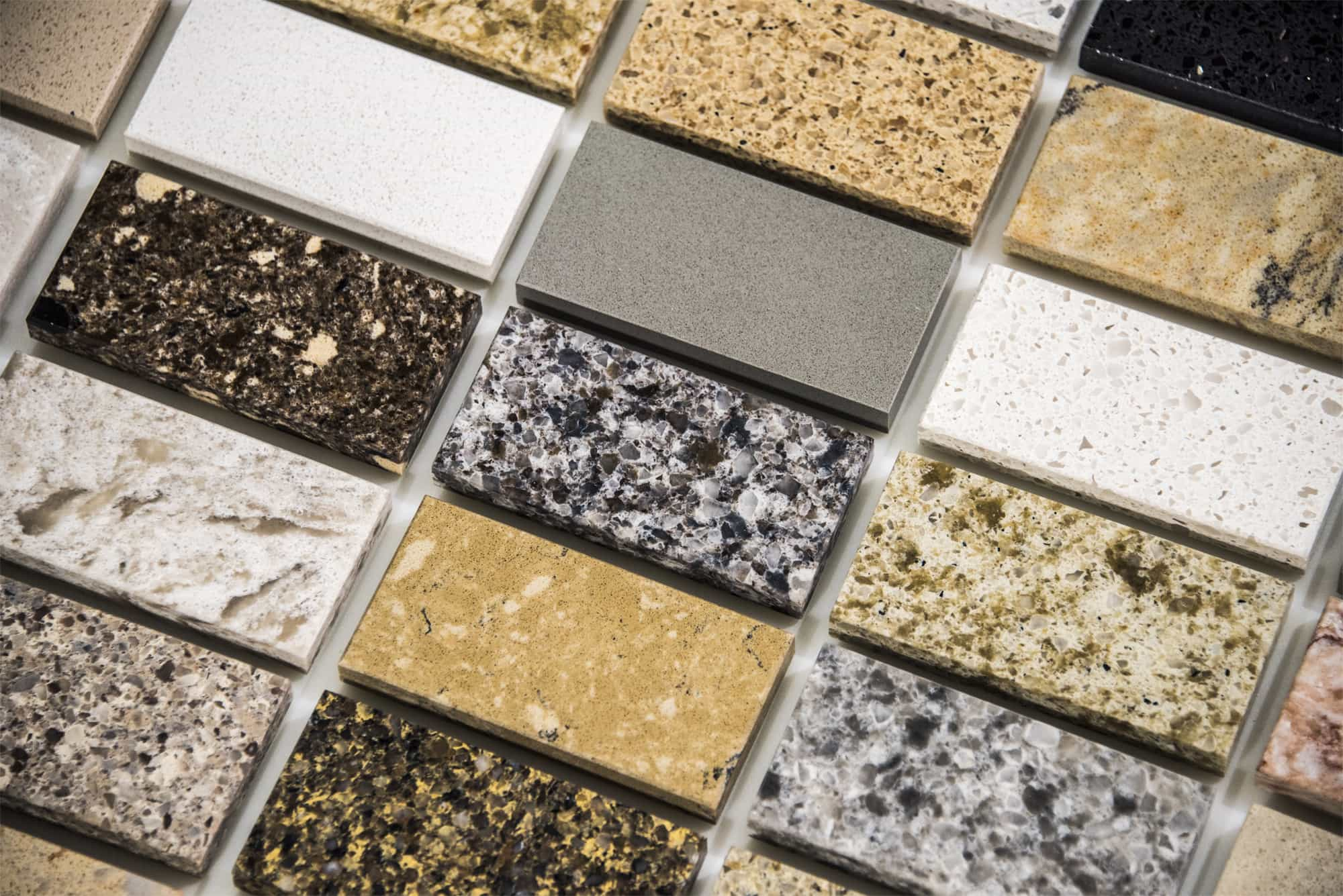
Types of Granite and Selection Tips You Must Know!
10 Feb 2024

Tips
No Need to Visit Multiple Stores, Check MAGIA Stock and Store Locations Here
26 Jul 2026
Tips
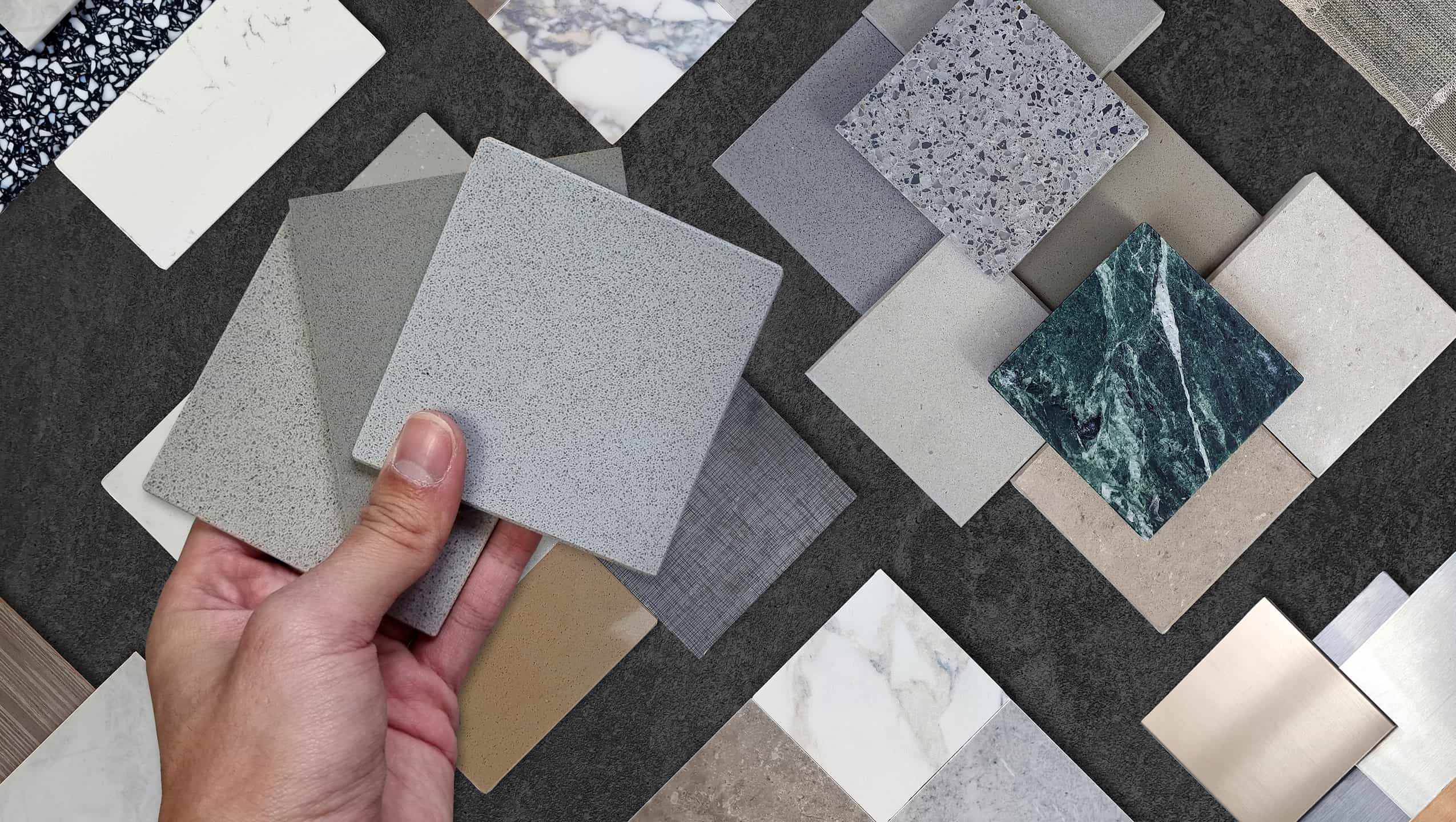
Understanding Granite Shading Color Variations: How to Find the Right Shading for Your Room
12 Dec 2024